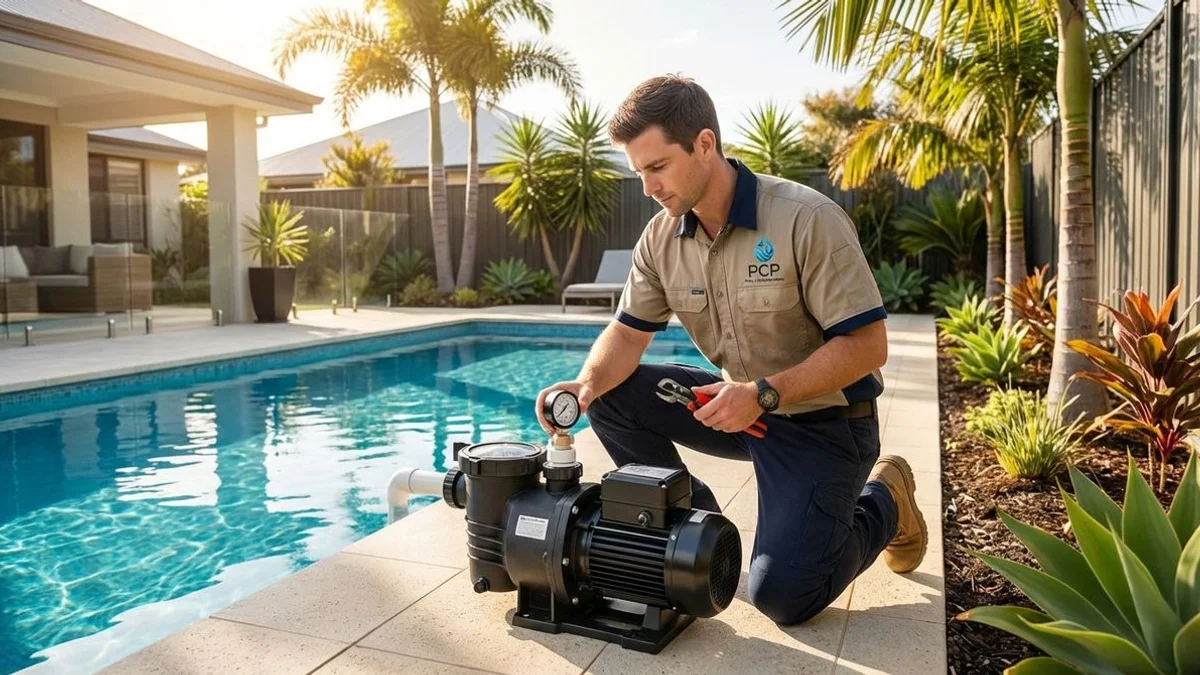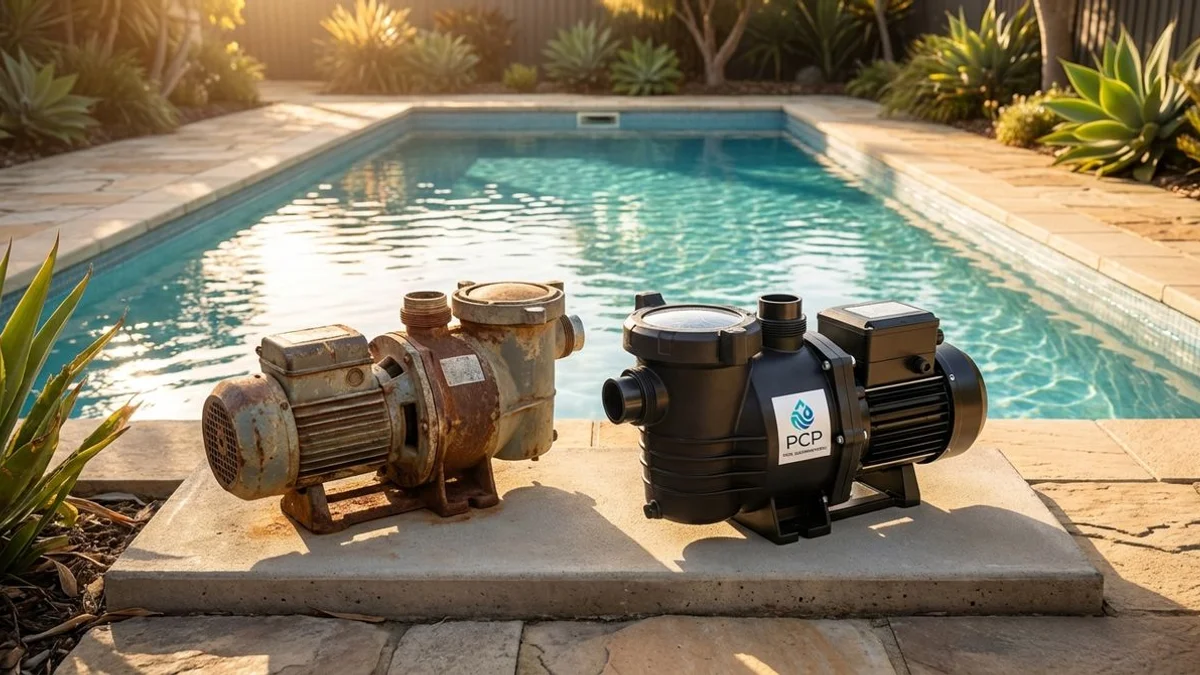
Pool pumps are built to last, but they do not last forever. After years of running daily in Perth’s harsh conditions, every pump eventually reaches the point where repairs no longer make financial sense. The challenge is knowing when you have crossed that line.
Spending $300 on a repair for a pump that fails again three months later is frustrating and wasteful. On the other hand, replacing a pump that could have been fixed with a $100 part is equally poor value. Here are five clear signs that your pool pump is ready for replacement rather than another repair.
1. The Pump Is More Than 10 Years Old
Pool pumps typically last 8 to 12 years with proper maintenance. Some quality brands push past 15 years in ideal conditions, but those conditions are rare in Perth. Our hot, dry climate, combined with dust, UV exposure, and hard water, takes a toll on pump motors and seals.
Once a pump passes the 10-year mark, the cost-benefit equation shifts. Individual repairs may still be possible, but the probability of multiple cascading failures increases significantly. A new bearing today often means a failed capacitor next month and a burned-out motor winding six months later.
The 50 Per Cent Rule
A reliable guideline is this: if a repair costs more than 50 per cent of a new pump’s price, replace it. For a standard residential pump that costs $800 to $1,200 to supply and install, any single repair exceeding $400 to $600 is approaching the replacement threshold.
Also consider cumulative repairs. If you have spent $500 or more on repairs in the past 12 months, a new pump is almost certainly the better investment.
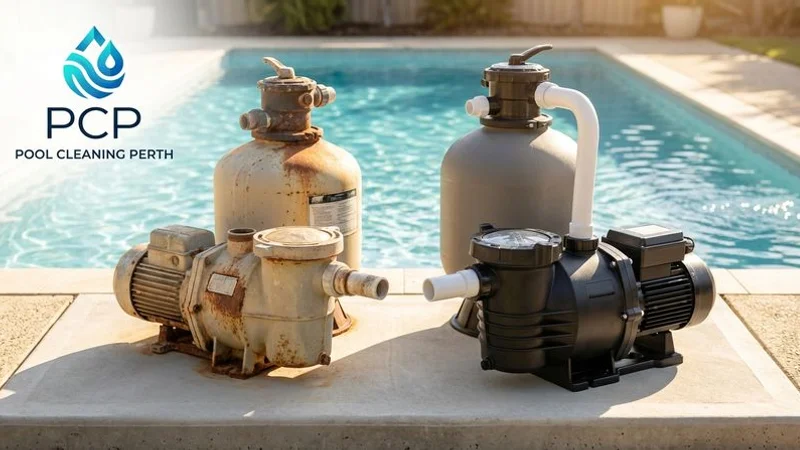
2. Your Energy Bills Have Increased Without Explanation
As pump motors age, they lose efficiency. Worn bearings create friction, degraded windings draw more current, and the motor works harder to achieve the same result. This increased energy consumption shows up on your electricity bill.
How to Check
Compare your current electricity usage with previous years. If your energy bill has increased and the only change is an aging pool pump, the motor is likely consuming significantly more power than when it was new.
A standard single-speed pool pump draws approximately 1,200 to 1,500 watts. An aging pump can draw 20 to 30 per cent more while producing less water flow. Over a year, running 8 hours per day, that extra energy consumption can add $200 to $400 to your electricity costs.
The Variable Speed Advantage
If your old pump is a single-speed model, replacement offers an opportunity to upgrade to a variable speed pump. Variable speed pumps can reduce energy consumption by 60 to 70 per cent compared to single-speed models by running at lower speeds for longer periods. The higher purchase price is typically recovered within 2 to 3 years through energy savings.
For Perth pools, where pumps need to run 8 to 10 hours daily in summer, the savings from a variable speed pump are substantial.
3. The Pump Makes Persistent Unusual Noises
Pool pumps produce some noise during normal operation, and most Perth pool owners are familiar with the sound of their pump running. When that sound changes, it is telling you something is wrong.
Noise Diagnosis
| Noise | Likely Cause | Repair or Replace? |
|---|---|---|
| High-pitched whine | Worn bearings | Repair if pump is under 8 years |
| Grinding or scraping | Severely worn bearings or impeller damage | Replace if bearing surfaces are damaged |
| Loud vibration | Loose mounting, worn base, motor imbalance | Repair if structural, replace if motor-related |
| Rattling | Loose internal components, debris in impeller | Inspect and assess |
| Screeching at startup | Capacitor failing, dry bearings | Repair if early stage |
If noise persists after a bearing replacement, the motor shaft or housing may be worn beyond serviceable condition. At this point, motor replacement or full pump replacement is the practical option.
The Neighbour Test
In Perth suburbs like Dalkeith, Cottesloe, and Mount Claremont, where houses are close together, a noisy pump is not just your problem. If neighbours are commenting on your pump noise, or if your pump can be heard from inside your house with the doors closed, it is likely past its serviceable life.
4. The Pump Frequently Loses Prime or Has Low Flow
A pump that regularly loses prime (stops circulating water) or produces noticeably less flow than it used to is showing signs of internal wear.
Common Causes of Declining Performance
Worn impeller. The impeller is the rotating component that creates water flow. Over time, particularly in pools with sand or fine debris, the impeller vanes erode. A worn impeller produces less flow even at full motor speed. Impeller replacement is possible, but if the diffuser and volute are also worn, the entire wet end may need replacing.
Internal seal wear. Multiple seals within the pump prevent water from reaching the motor. As these seals age, small leaks develop that allow air in and water out, reducing suction and flow.
Corroded or scaled internal components. Perth’s scheme water contains moderate levels of calcium and other minerals. Over years of operation, these minerals can deposit on internal pump surfaces, reducing efficiency.
Testing Flow Rate
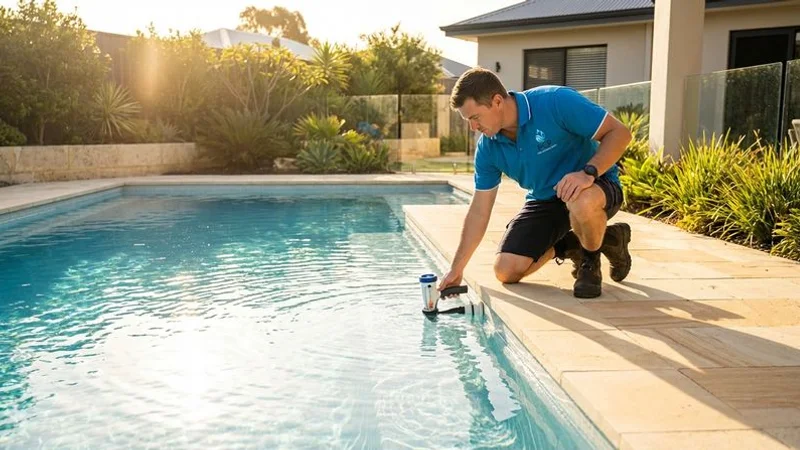
You can do a rough flow test by timing how long it takes to fill a known volume from a return jet. Compare this to the pump’s rated flow. If actual flow is significantly below the rated capacity, the pump is underperforming.
A professional can perform a precise flow test and compare it to the pump’s specifications. If the pump is producing less than 70 per cent of its rated flow despite clean filters and clear pipes, internal wear is likely the cause and replacement is the practical solution.
5. Visible Corrosion, Cracks, or Physical Deterioration
Pool pumps live outdoors in Perth’s UV-intensive environment. Over time, plastic components become brittle, metal fittings corrode, and structural integrity degrades.
What to Look For
- Cracked pump housing or lid: UV-degraded plastic becomes brittle and cracks. A cracked housing allows air leaks and water leaks. While individual components can sometimes be replaced, widespread UV damage usually means the entire pump body is compromised.
- Corroded motor housing: Rust and corrosion on the motor housing indicate moisture has been reaching the motor. This is often caused by a failed shaft seal that has been leaking over time.
- Deteriorated wiring and terminals: Check the electrical connections at the back of the motor. Green corrosion on terminals indicates moisture exposure and can create a fire or shock hazard.
- Rust-stained base plate: A rust stain beneath the pump indicates ongoing moisture exposure, usually from a failed seal.
If your pump shows multiple signs of physical deterioration, repair of one component often reveals that other components are equally degraded. Replacement is the safer and more economical choice.
Choosing a Replacement Pump
When it is time for a new pump, consider the following factors relevant to Perth pools:
Size Appropriately
An oversized pump wastes energy and can damage your filter. An undersized pump cannot circulate the pool volume adequately. Your replacement pump should be matched to your pool size, pipe diameter, and filter capacity.
Consider Variable Speed
Variable speed pumps are the gold standard for energy efficiency. While they cost more upfront ($1,200 to $2,000 installed), the energy savings of 60 to 70 per cent compared to single-speed models make them the most cost-effective option over the pump’s lifetime.
Choose a Reputable Brand
In Perth, the most commonly used and well-supported brands include Davey, Onga, AstralPool, and Waterco. These brands have strong local dealer networks, readily available parts, and local warranty support.
Professional Installation
Pool pump installation involves plumbing and electrical work. In Western Australia, the electrical connection must be performed by a licensed electrician. Ensure your installer provides a compliance certificate.
Pool Cleaning Perth supplies and installs quality pool pumps from leading Australian brands. We will assess your pool, recommend the right pump for your needs, and handle the complete installation including electrical certification. Call us on 08 7943 6637 for a free pump assessment and quote.
Need Professional Pool Help?
Our team of experienced technicians is ready to help with all your pool needs across Perth.
Get a Free Quote