Salt chlorinators are the most popular sanitation system for residential pools in Perth, and for good reason. They produce chlorine from dissolved salt, eliminating the need to handle and store liquid or granular chlorine. But like any piece of equipment, they can develop problems that reduce or stop chlorine production.
When your salt chlorinator stops working properly, your pool’s chlorine level drops, and in Perth’s warm climate, algae can take hold within days. Understanding the common problems and their solutions helps you act quickly and decide whether it is something you can fix or a job for a professional.
How a Salt Chlorinator Works
Before diving into problems, it helps to understand the basics. A salt chlorinator has two main components:
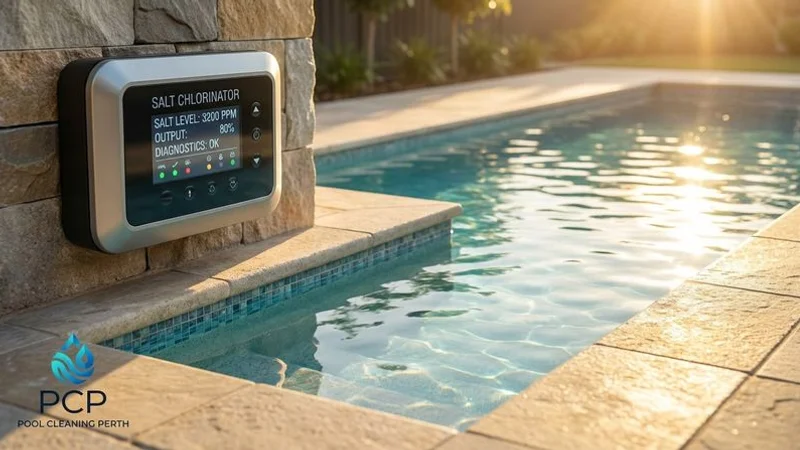
The control unit sits on the wall near your pool equipment. It controls the electrical current sent to the cell, displays settings and diagnostics, and manages the self-cleaning cycle (if equipped).
The cell is plumbed inline in the return pipe after the filter. It contains titanium plates coated with precious metals (typically ruthenium and iridium). When water with dissolved salt passes through the cell and an electrical current is applied, electrolysis converts sodium chloride (salt) into sodium hypochlorite (liquid chlorine).
Problem 1: Low or No Chlorine Production
This is the most common complaint we hear. The chlorinator appears to be running, but chlorine levels in the pool are dropping or non-existent.
Possible Causes and Solutions
Low salt level. Every chlorinator has a minimum salt requirement, typically between 3,500 and 6,000 ppm depending on the brand. If salt drops below the minimum threshold, the unit reduces or stops chlorine production. Some units display a low salt warning.
Solution: Test salt levels with a proper salt test kit or have them tested professionally. If low, add pool salt (not table salt or rock salt) to bring levels into the recommended range. Allow 24 hours for salt to dissolve and distribute before retesting.
Scaled or dirty cell. Calcium deposits build up on the cell plates over time, reducing the surface area available for electrolysis. Perth’s water has moderate to high calcium levels, making this a frequent issue.
Solution: Remove the cell and inspect it. If white scale is visible on the plates, clean the cell by soaking it in a diluted hydrochloric acid solution (one part acid to ten parts water) for 5 to 10 minutes. Rinse thoroughly before reinstalling. Most manufacturers recommend cleaning the cell every 3 to 6 months.
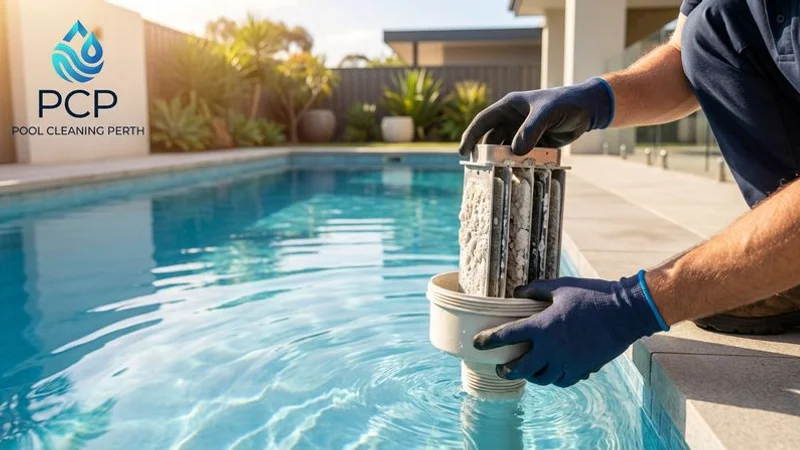
Worn cell plates. The precious metal coating on chlorinator cell plates gradually wears away with use. Once the coating is depleted, the cell can no longer produce chlorine efficiently. This is a normal wear item, with most cells lasting 3 to 7 years.
Solution: If cleaning does not restore adequate chlorine output, the cell may need replacing. A professional can test the cell’s output to confirm. Replacement cells cost $400 to $800 depending on the brand and model.
Output setting too low. Some pool owners set their chlorinator output too low, particularly during the cooler months. When summer arrives and chlorine demand increases, the setting is no longer adequate.
Solution: Increase the output setting gradually. During Perth’s summer, most chlorinators should run at 60 to 80 per cent output. During winter, 30 to 50 per cent is usually sufficient. Monitor chlorine levels and adjust accordingly.
Problem 2: Error Codes and Warning Lights
Modern salt chlorinators display error codes or warning lights when they detect a problem. While specific codes vary by brand, here are the most common:
Low Salt Warning
The unit detects that salt concentration is below the operating threshold. This can be a genuine low salt situation or a sensor issue.
What to do: Test salt levels independently. If salt is actually in range, the cell may need cleaning (dirty plates can give false low salt readings) or the sensor may need replacement.
High Salt Warning
The salt level exceeds the maximum recommended concentration. This typically happens when too much salt was added or when water evaporates and concentrates the remaining salt.
What to do: Test salt levels. If genuinely high, dilute by draining some pool water and replacing it with fresh water. Do not keep adding salt when the unit says levels are already adequate.
No Flow / Low Flow
The chlorinator has a flow sensor that detects water passing through the cell. If flow drops below the minimum required, the unit shuts down to protect the cell from damage.
What to do: Check that your pump is running and producing normal flow. Clean your filter (a dirty filter reduces flow). Check for blockages in the plumbing upstream or downstream of the cell. Inspect the flow sensor for debris.
Cell Inspection / Service Warning
Many chlorinators have a timer that triggers a maintenance reminder every 500 to 1,000 operating hours. This is not necessarily an error but a prompt to inspect and clean the cell.
What to do: Remove and inspect the cell. Clean if needed. Reset the service timer per the manufacturer’s instructions.
Problem 3: Chlorinator Tripping the Power
If your chlorinator is tripping the circuit breaker or RCD (safety switch), there may be an electrical fault in the control unit, the cell, or the wiring.
Possible Causes
- Water ingress in the control unit: Rain or sprinkler water entering the control enclosure can cause short circuits
- Corroded cell terminals: The cell connector pins can corrode over time, creating electrical faults
- Damaged cell cable: The cable between the control unit and the cell can be damaged by UV exposure, garden equipment, or rodents
What to do: Do not repeatedly reset the breaker. This is a safety issue that requires a licensed electrician or qualified pool equipment technician. Turn off the chlorinator at the isolator switch until it can be inspected.
Problem 4: Chlorinator Running But Pool Still Going Green
This is a confusing situation. The chlorinator appears to be running normally, no error codes are displayed, but your pool is developing algae.
Most Likely Cause: Over-Stabilisation
The most common reason for this in Perth pools is excessive cyanuric acid (stabiliser). Your chlorinator is producing chlorine, but the stabiliser levels are so high that the chlorine is bound and cannot effectively kill algae.
Solution: Test stabiliser levels. If above 80 ppm, you need to partially drain the pool and refill with fresh water to reduce stabiliser concentration. The chlorinator cannot fix this problem on its own because chlorine produced by salt chlorinators does not add stabiliser (only granular chlorine and tablets contain stabiliser).
Other Causes
- Phosphates: High phosphate levels feed algae growth and can overwhelm chlorine production. A phosphate remover may be needed.
- Inadequate pump run time: The chlorinator only produces chlorine while the pump is running. If pump run time is too short, total daily chlorine production may be insufficient.
- Cell nearing end of life: The cell may still produce some chlorine but not enough to meet the pool’s demand.
Maintenance Tips to Prevent Problems
Regular maintenance significantly extends your chlorinator’s life and prevents most common problems:
- Inspect the cell quarterly: Look for scale buildup and clean as needed
- Test salt levels monthly: Maintain levels within the manufacturer’s recommended range
- Keep water chemistry balanced: Proper pH (7.2 to 7.6) and calcium hardness (200 to 300 ppm) reduce scaling on the cell
- Run the pump long enough: Ensure adequate daily run time for sufficient chlorine production
- Protect the control unit: Ensure the enclosure is waterproof and shaded from direct sun where possible
- Schedule annual professional servicing: A technician can test actual cell output, inspect electrical connections, and identify developing issues
When to Replace Your Salt Chlorinator
Consider replacement when:
- The cell has been replaced twice already (the control unit may also be aging)
- The control unit is displaying frequent unexplained errors
- Parts are no longer available for your model
- The unit is more than 10 to 12 years old
- Repair costs exceed 50 per cent of a new unit’s price
Modern chlorinators offer improved efficiency, better self-cleaning cycles, and smart connectivity features that make pool management easier.
Pool Cleaning Perth services and repairs all major salt chlorinator brands across the Perth metro area. Whether you need a cell clean, a diagnosis of error codes, or advice on replacing an aging unit, our team can help. Call us on 08 7943 6637 to book a chlorinator inspection.
Need Professional Pool Help?
Our team of experienced technicians is ready to help with all your pool needs across Perth.
Get a Free Quote