Pool safety is not optional in Western Australia. The state has some of the strictest pool safety regulations in Australia, and for good reason. Drowning remains one of the leading causes of accidental death in children under five, and the vast majority of these tragedies occur in private residential pools.
As a Perth pool owner, you have a legal obligation to maintain compliant safety barriers around your pool. Failure to comply can result in fines exceeding $5,000, and more importantly, non-compliance puts lives at risk. Here is a comprehensive checklist to help you understand and meet your obligations.
Pool Fencing Requirements in Western Australia
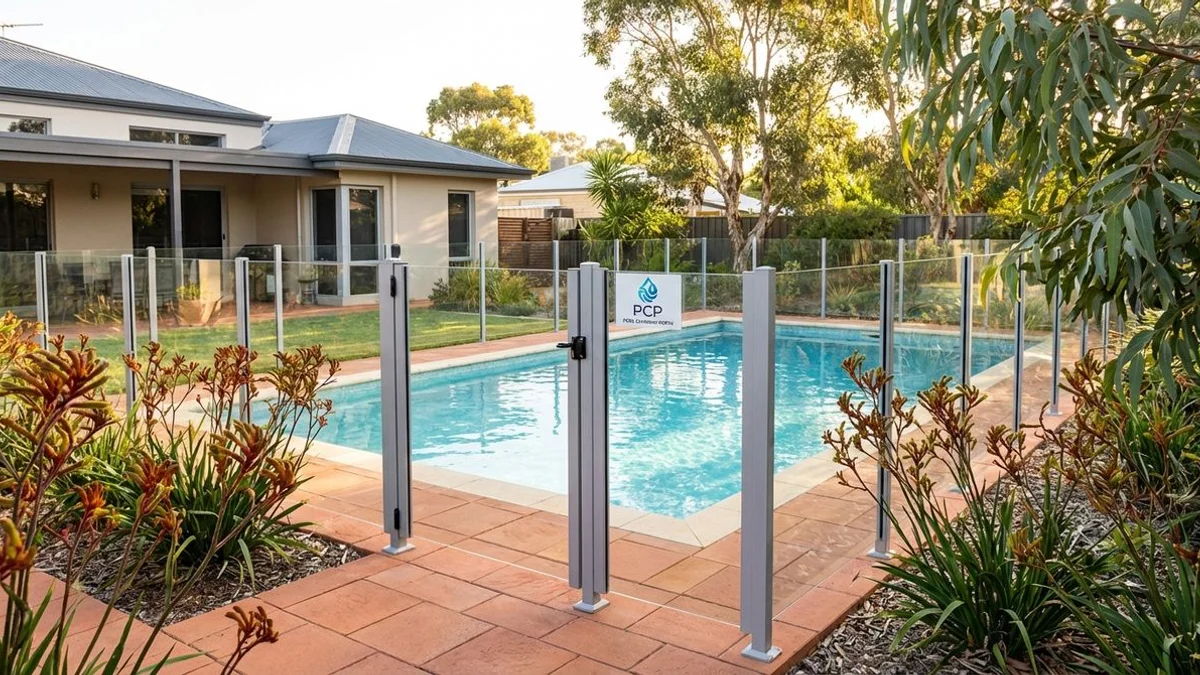
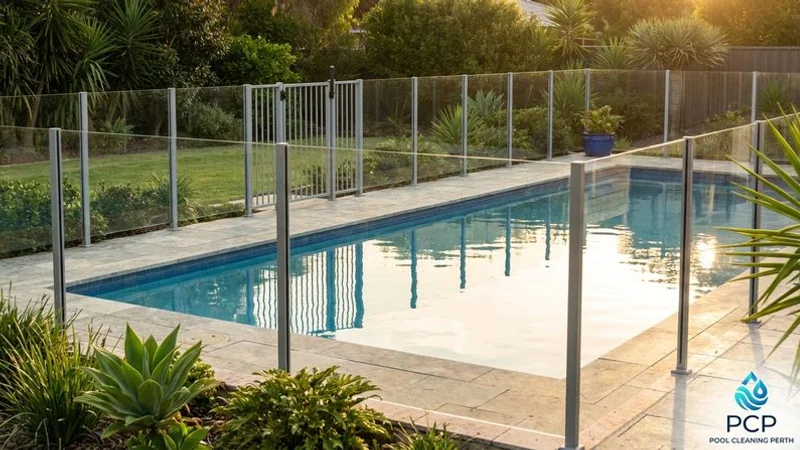
Under the Building Regulations 2012 and the Building Act 2011, all swimming pools and spas in WA that are capable of holding more than 300mm of water must be surrounded by a compliant safety barrier.
Fence Height
The fence must be at least 1,200mm high, measured from the finished ground level on the outside of the fence. If the ground slopes, the measurement is taken from the highest point of the ground on the outside.
Fence Construction
- No climbable objects within 900mm of the fence on the outside. This includes pot plants, garden furniture, retaining walls, trees, and any structure a child could use to climb over the fence.
- Vertical bars must be spaced no more than 100mm apart (a child’s head must not be able to pass through).
- Horizontal rails or elements that could provide footholds must not be on the outside of the fence. If horizontal elements are used, they must be on the pool side.
- The bottom of the fence must be no more than 100mm above the ground. Gaps larger than this allow small children to squeeze underneath.
Non-Climbable Zone (NCZ)
The non-climbable zone extends 900mm from the top of the fence and 300mm from the outside face of the fence. Within this zone, there must be nothing a child could use as a foothold or handhold to climb the fence. This includes:
- Tree branches
- Garden beds or retaining walls
- Air conditioning units
- Pool equipment housings
- Stored items or furniture
Gate Requirements
Pool gates are the most common point of failure in pool safety inspections. The gate is designed to be the only access point through the pool barrier, and it must meet strict requirements.
Self-Closing
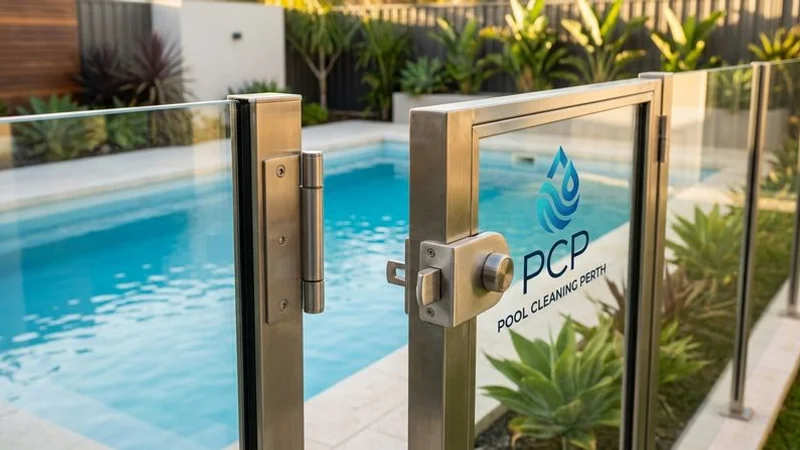
The gate must close and latch automatically from any open position. This means the hinges must be spring-loaded or use a self-closing mechanism that reliably pulls the gate shut without assistance.
Self-Latching
The latch must engage automatically when the gate closes. It must be positioned at least 1,500mm above the ground on the inside of the gate, or if lower, must be shielded so that a child cannot reach it from the outside.
Opens Outward
The gate must open away from the pool area. This prevents a child from pushing the gate open towards the pool.
No Locking Device on the Outside
While the gate can have a lock, it must not have a latch or handle on the outside that a child could operate. Key-operated locks are permitted but must not interfere with the self-closing and self-latching mechanism.
Testing Your Gate
Stand on the pool side of the gate, open it to 150mm from the fully closed position, and release it. The gate should close and latch completely on its own. If it does not, the self-closing mechanism needs adjustment or replacement.
Then open the gate fully and release it. It must still close and latch from this position as well.
CPR Signage
Western Australian regulations require that a current CPR (Cardiopulmonary Resuscitation) sign be displayed in a prominent position within the pool area. The sign must be:
- Current version: CPR guidelines are updated periodically. Your sign should reflect the latest guidelines from the Australian Resuscitation Council.
- Durable and weatherproof: The sign must be legible and not faded. Perth’s UV exposure can quickly degrade outdoor signage.
- Prominently displayed: It should be easily visible from the pool area, not hidden behind equipment or vegetation.
- Correct size: The sign must be at least A4 size (210mm x 297mm).
You can purchase compliant CPR signs from pool shops, hardware stores, or online. They typically cost $15 to $30. Replace faded or outdated signs promptly.
Door and Window Access
If your house has doors or windows that open directly into the pool area, these access points must comply with specific requirements:
Doors
Doors opening into the pool area must be self-closing and self-latching, with the latch at least 1,500mm above the floor on the pool side. Standard sliding doors do not comply unless fitted with a compliant self-closing device and child-resistant latch.
Windows
Windows that open into the pool area must be restricted so they cannot open more than 100mm, or they must be fitted with compliant screens or guards.
Common Issues
We frequently see the following door and window compliance failures during inspections:
- Sliding doors without self-closing devices
- Screen doors used as the barrier (fly screens do not constitute a compliant barrier)
- Door closers that are worn and no longer reliably self-close
- Latches that have been disabled or are too low
Council Inspections in Perth
Local councils in the Perth metropolitan area conduct pool safety inspections. These can be triggered by:
- New pool registration: All pools must be registered with your local council
- Property sale: Many councils inspect pools when a property changes hands
- Routine inspections: Some councils conduct periodic inspections of registered pools
- Complaints: A neighbour or visitor can report a non-compliant pool
What Inspectors Check
During an inspection, the inspector will verify:
- Fence height and construction compliance
- Gate self-closing and self-latching operation
- Non-climbable zone clearance (900mm from fence top)
- Gap under the fence (no more than 100mm)
- Vertical bar spacing (no more than 100mm apart)
- Door and window compliance (if opening into pool area)
- CPR signage (current and displayed)
- No climbable objects near the fence
- Pool registration with the council
Penalties for Non-Compliance
Fines for pool safety non-compliance in Western Australia can exceed $5,000. In some cases, councils can issue rectification notices requiring you to fix the issue within a specified timeframe, followed by re-inspection.
Your Pool Safety Checklist
Use this checklist to assess your pool’s compliance:
Fencing
- Fence is at least 1,200mm high on the outside
- Vertical bars are spaced no more than 100mm apart
- Gap under the fence is no more than 100mm
- No horizontal footholds on the outside of the fence
- Non-climbable zone (900mm) is clear of objects
Gates
- Gate is self-closing from any open position
- Gate is self-latching (latch engages automatically)
- Gate opens away from the pool
- Latch is at least 1,500mm high or shielded
Doors and Windows
- House doors opening to pool area are self-closing and self-latching
- Windows opening to pool area are restricted to 100mm or protected
- Screen doors are not relied upon as the barrier
Signage and Registration
- Current CPR sign displayed prominently
- Pool is registered with your local council
General
- No climbable objects within 900mm of fence
- Pool equipment, furniture, and garden features positioned away from fence
- Trees and vegetation trimmed away from fence
Maintaining Compliance Over Time
Pool safety is not a one-time check. Regular maintenance ensures ongoing compliance:
- Test your gate monthly: Open and release from various positions to ensure it self-closes and latches reliably
- Inspect fence condition quarterly: Look for damage, rust, loose fixings, or gaps that have developed
- Monitor vegetation: Trees and plants grow and can encroach on the non-climbable zone
- Replace CPR signage: When guidelines are updated or signs fade
- After storms: Check for damage to fencing and gates
Pool Cleaning Perth includes a basic safety compliance check as part of our regular pool servicing. If we notice any issues with your fencing, gate, or signage during a routine visit, we will let you know so you can address them promptly. For a comprehensive pool inspection, call us on 08 7943 6637.
Need Professional Pool Help?
Our team of experienced technicians is ready to help with all your pool needs across Perth.
Get a Free Quote