Your pool pump is the heart of your pool system. When it stops working, circulation stops, filtration stops, and your chlorinator stops producing chlorine. In Perth’s warm climate, a non-functioning pump can lead to a green pool in as little as two to three days during summer.
Before you panic or call for an emergency repair, there are several things you can check yourself. Some pump problems have simple fixes that do not require a technician. Others need professional attention, but understanding the issue helps you communicate the problem and avoid unnecessary service calls.
Quick Checks Before Calling a Professional
Check the Power Supply
This sounds obvious, but it is the most common cause of a “dead” pump. Check the following:
- Circuit breaker: Has the pump’s circuit breaker tripped? Check your switchboard. Pool pumps draw significant current, especially when starting, and it is common for breakers to trip during a power surge or after a brief outage. Reset the breaker and see if the pump starts.
- Timer: If your pump runs on a timer, verify the timer settings have not been changed, lost power, or reset. Digital timers can lose their programming after a power outage.
- Safety switch (RCD): Perth homes are required to have residual current devices. If your RCD keeps tripping when the pump starts, there may be a wiring or motor fault. Do not keep resetting it as this indicates a safety issue.
Check the Pump Basket
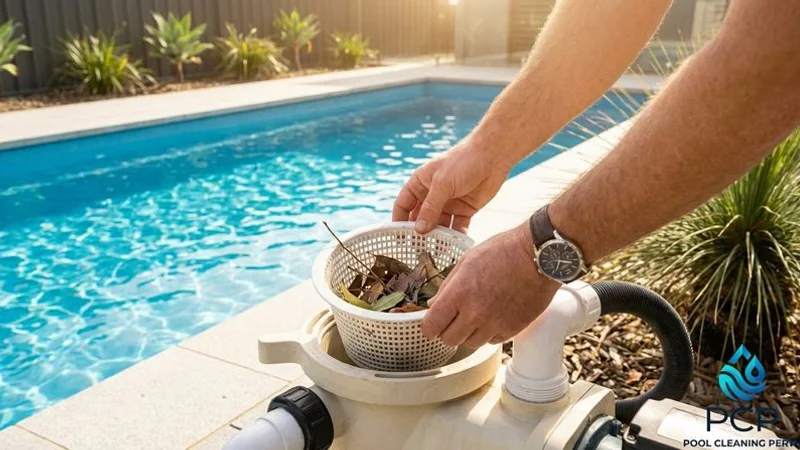
A severely clogged pump basket restricts water flow to the point where the pump may overheat and shut down on its thermal protection switch. Turn off the pump, open the lid, and clear any debris. While you are there, check the pump basket for cracks. A cracked basket allows debris to reach the impeller.
Check for Air Leaks
If the pump is running but not moving water (or moving very little), air may be entering the system. Look for:
- Loose pump lid: The lid O-ring may be dry, cracked, or not seated correctly. Lubricate it with silicone lubricant and re-seat it.
- Air bubbles in the pump basket: If you can see air bubbles swirling inside the pump while it runs, air is entering from somewhere upstream of the pump.
- Low water level: If the pool water level has dropped below the skimmer opening, the pump will suck air instead of water. Top up the pool.
Check for Blockages
A blocked impeller is a common issue, especially after storms that wash debris into the pool. Signs include the pump motor running but producing little or no water flow, or the pump making a strained humming noise. Clearing an impeller requires removing the pump volute, which most pool owners can do with basic tools, but if you are not comfortable with this, call a professional.
Common Pump Problems and What They Mean
The Pump Hums But Does Not Start
Likely cause: A seized motor or a failed capacitor. The capacitor provides the extra electrical boost needed to start the motor spinning. When it fails, the motor tries to start, cannot get enough torque, and produces a humming or buzzing sound.
What to do: Turn the pump off immediately. Running a motor that cannot start generates excessive heat and can burn out the windings. This is a repair that requires a technician. Capacitor replacement is relatively inexpensive ($80 to $150 including labour), but if the motor has already been damaged by overheating, a motor replacement may be needed.
The Pump Makes a Loud Grinding or Screeching Noise
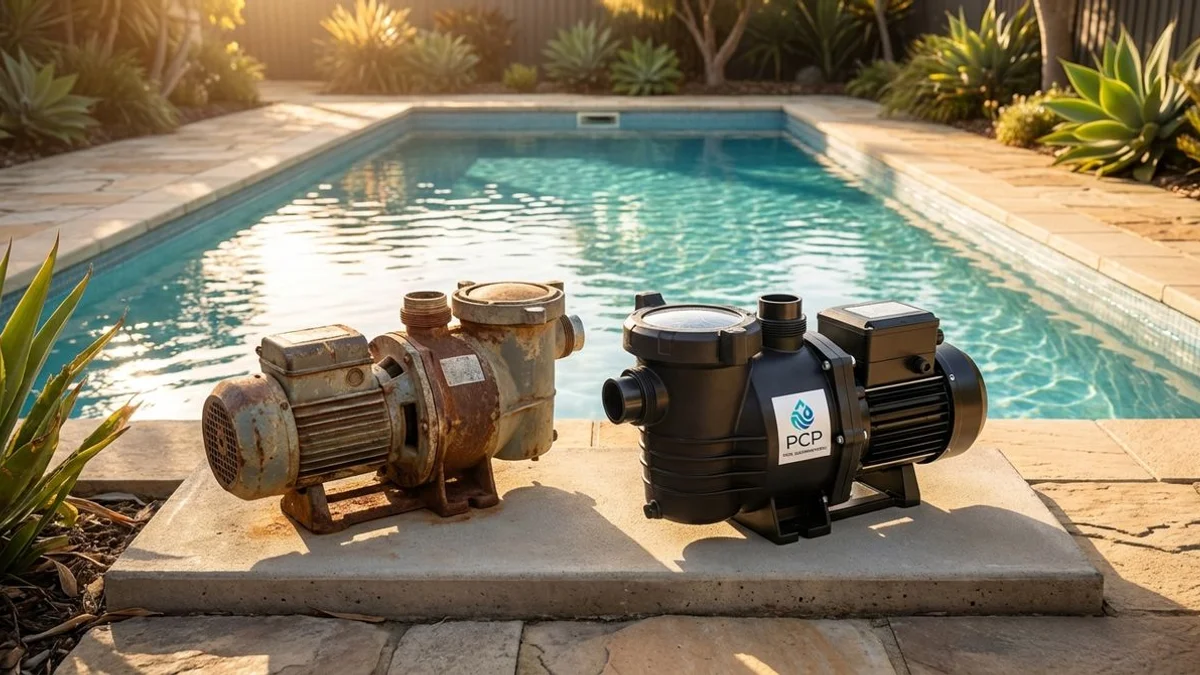
Likely cause: Worn motor bearings. Bearings wear out over time, especially in Perth’s dry, dusty conditions. The noise typically starts as a faint whine and progressively gets louder over weeks or months.
What to do: Bearing replacement is possible and costs $150 to $300 for most pump models. However, if the pump motor is old (10+ years), it may be more cost-effective to replace the entire pump or motor assembly rather than investing in bearings for an aging unit.
The Pump Starts and Stops Repeatedly
Likely cause: Thermal overload protection. The motor is overheating and the built-in thermal switch shuts it down to prevent damage. Once it cools, it restarts, then overheats again.
Common causes of overheating include:
- Restricted airflow around the motor (overgrown vegetation, enclosed pump housing with poor ventilation)
- Blocked impeller causing the motor to work harder
- Low voltage to the motor
- A failing capacitor that is not providing enough starting torque
What to do: Check for airflow restrictions and impeller blockages first. If the problem persists, call a technician.
The Pump Loses Prime
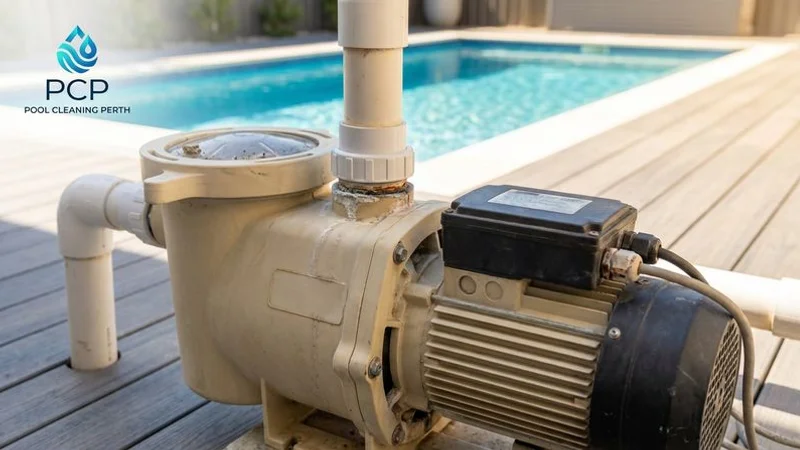
Losing prime means the pump cannot maintain suction and water flow. You will see the pump basket empty of water while the motor runs, or air continuously entering the system.
Common causes in Perth pools:
- Cracked suction pipe: Perth’s clay soils expand and contract with moisture changes, which can crack underground PVC pipes over time. This is one of the more expensive repairs as it may require excavation.
- Failing shaft seal: The shaft seal prevents water from leaking out around the motor shaft. When it fails, air enters instead. Shaft seals are a standard wear item and cost $100 to $200 to replace.
- Blocked or restricted suction line: Tree roots can grow into or crush suction pipes, especially in established suburbs with mature trees.
Water Leaking from the Pump
Likely causes:
- Shaft seal failure: The most common source of pump leaks. You will see water dripping from the bottom of the pump where the motor meets the pump body.
- Cracked pump housing: Occasionally, the volute (pump body) can crack due to frost (rare in Perth), UV degradation, or impact damage.
- Loose fittings: PVC unions and connectors can work loose over time, especially if they were not glued or were only hand-tightened.
What to do: Any pump leak should be addressed promptly. Even a slow drip wastes water and can damage the motor and electrical connections.
When to Call a Professional
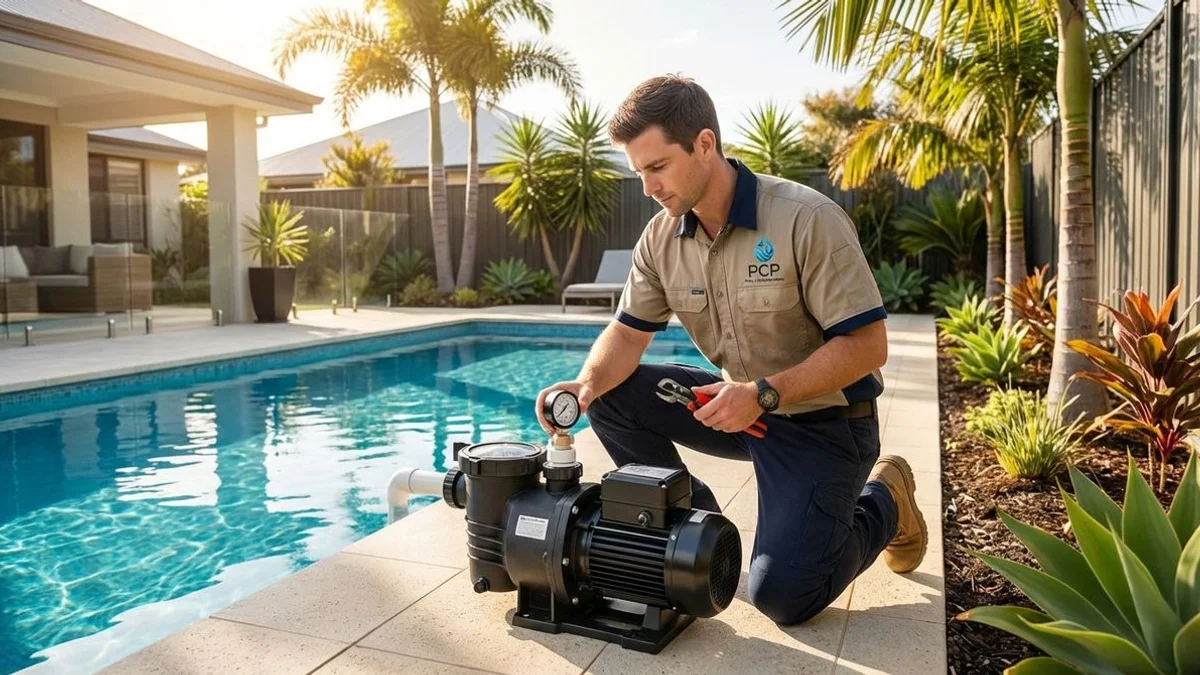
While basic checks and basket cleaning are safe for pool owners to do themselves, the following situations require a qualified technician:
- Any electrical issue (tripping breakers, RCD faults, wiring concerns)
- Motor replacement or bearing repair
- Shaft seal replacement
- Suspected underground pipe damage (may require leak detection)
- Pump running but producing zero water flow after clearing the basket and impeller
- Any situation where you are unsure about the cause
Pool pumps involve electrical and plumbing components that can be hazardous if handled incorrectly. In Western Australia, electrical work on pool equipment must be carried out by a licensed electrician.
Preventing Pump Problems
Regular maintenance extends your pump’s life and catches small issues before they become expensive repairs:
- Clean the pump basket weekly to prevent impeller blockages
- Lubricate the lid O-ring every few months with silicone-based lubricant
- Keep the area around the pump clear for airflow and ventilation
- Listen for changes in pump noise. A change in sound almost always indicates a developing problem
- Have your pump professionally serviced annually as part of a comprehensive pool equipment check
Need Help with Your Pool Pump?
If your pool pump has stopped working and the basic checks above have not resolved the issue, our team can help. Pool Cleaning Perth provides pool equipment repair services across the Perth metropolitan area. We carry common parts for major pump brands and can often complete repairs on the first visit. Call us on 08 7943 6637 for a prompt assessment of your pump problem.
Need Professional Pool Help?
Our team of experienced technicians is ready to help with all your pool needs across Perth.
Get a Free Quote