Perth’s climate is ideal for pool ownership, but even our relatively mild winters can make pool water uncomfortably cold from May through September. If you want to extend your swimming season or swim comfortably year-round, pool heating is the answer.
The three main heating options available to Perth pool owners are solar heating, heat pumps, and gas heaters. Each has distinct advantages, and the best choice depends on your budget, pool size, how you use your pool, and how warm you want the water.
Solar Pool Heating
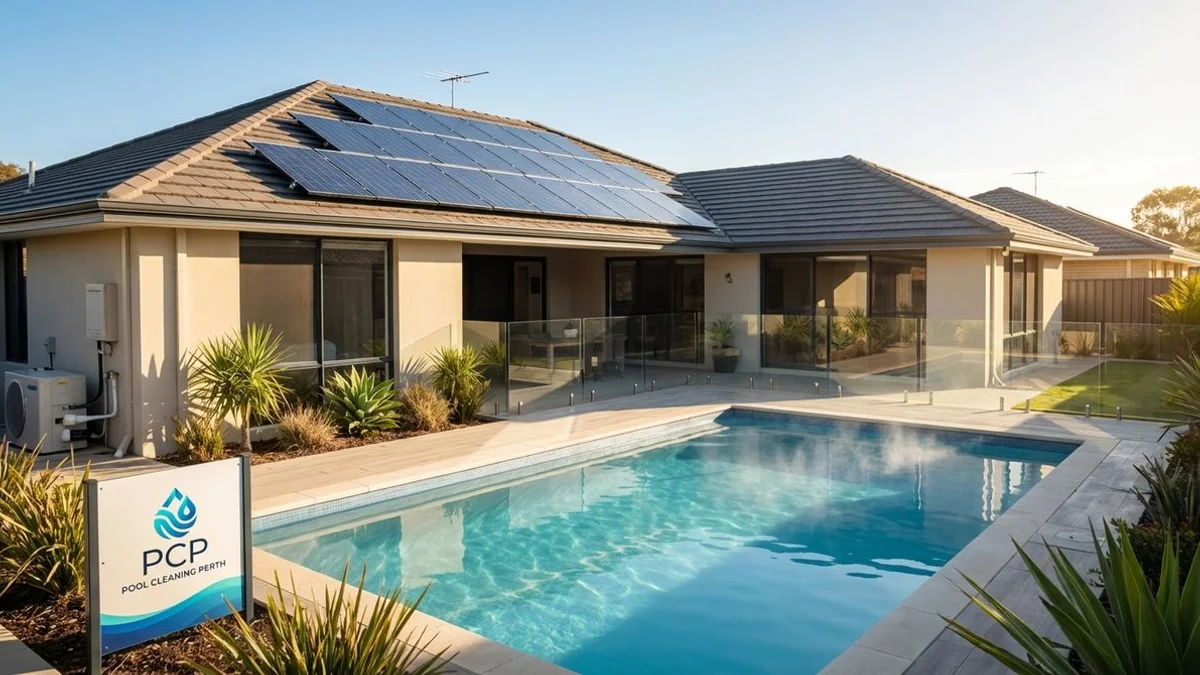
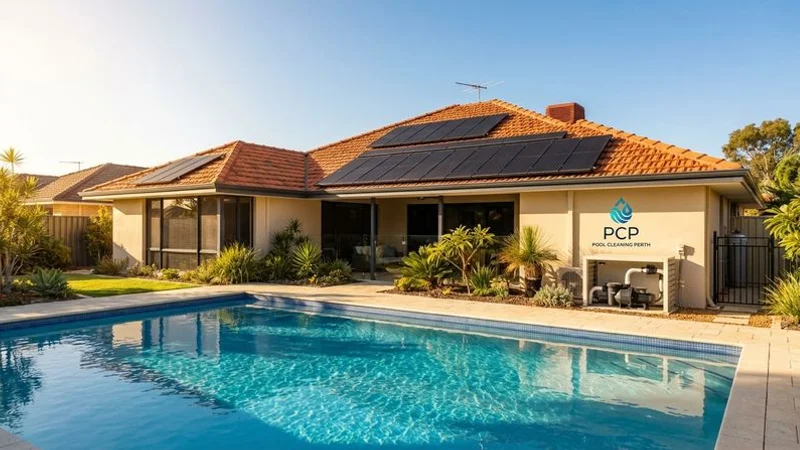
Solar heating uses roof-mounted panels or tubes to warm pool water using the sun’s energy. Water is pumped from the pool through the solar collectors on your roof, where it absorbs heat before returning to the pool.
How It Works in Perth
Perth is one of the best cities in Australia for solar pool heating. With an average of 8 hours of sunshine per day and over 260 sunny days per year, solar systems perform exceptionally well. A properly sized solar system can extend your swimming season by 3 to 4 months, typically from September through May.
Costs
- Installation: $3,000 to $6,000 (depends on roof area and pool size)
- Running costs: Near zero (uses existing pool pump, minimal additional energy)
- Maintenance: Minimal (occasional check of connections and collector condition)
- Lifespan: 15 to 25 years for quality strip or tube systems
Pros
- Lowest running costs of any heating option
- Uses abundant free solar energy that Perth has in abundance
- No greenhouse gas emissions during operation
- Long lifespan with minimal maintenance
- Proven technology with decades of track record in Perth
Cons
- Performance is weather-dependent (cloudy days and winter evenings produce less heat)
- Cannot heat water on demand or to a specific temperature reliably
- Requires suitable roof space with good northern or western exposure
- Slower to heat the pool initially
- Less effective in Perth’s winter months (June to August) when sunshine hours are reduced
Heat Pumps
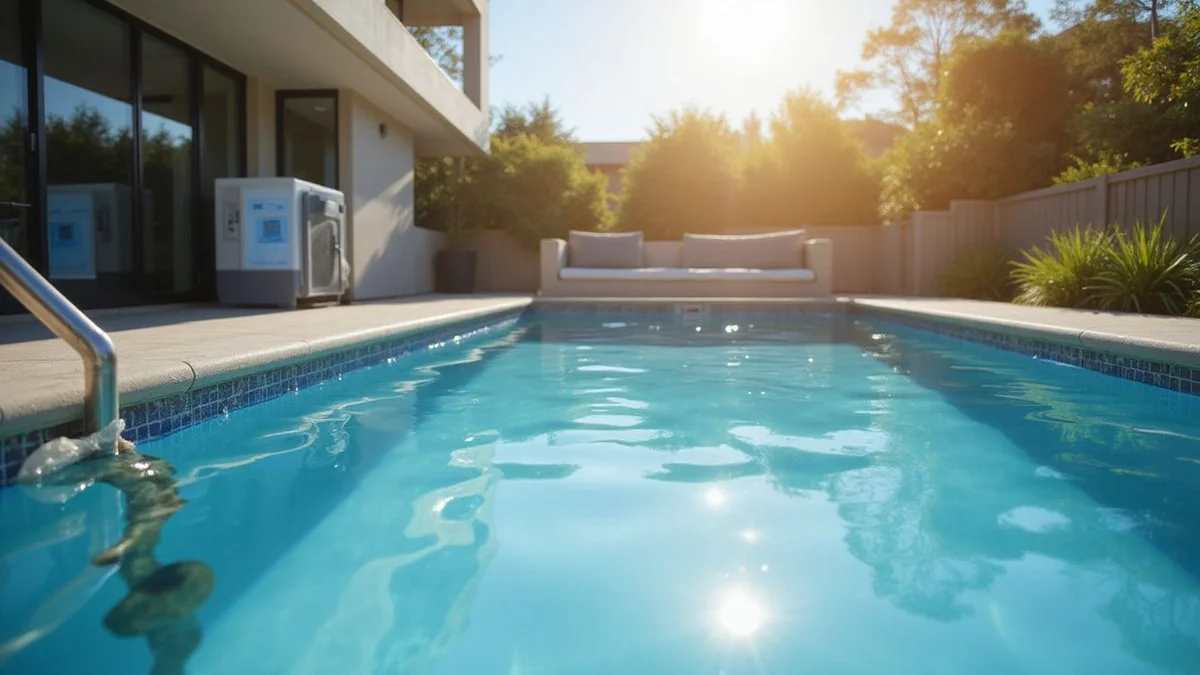
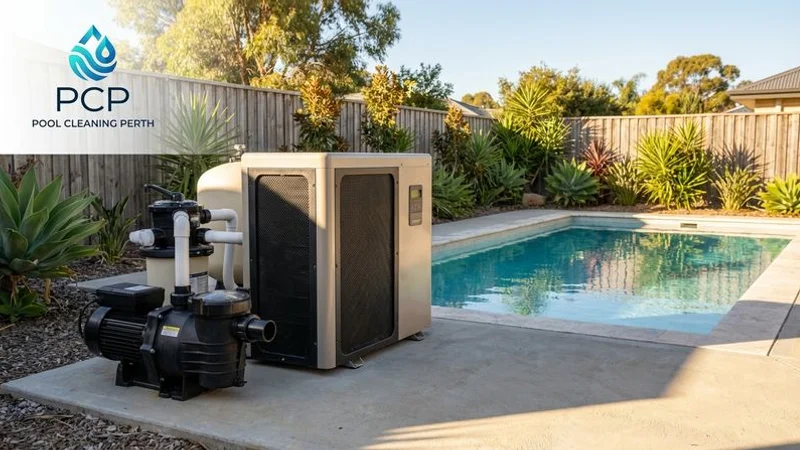
Heat pumps extract heat from the ambient air and transfer it to the pool water. They work on the same principle as a reverse-cycle air conditioner but in reverse, pulling warmth from outdoor air and using it to heat the water.
How They Work in Perth
Heat pumps perform well in Perth’s climate because they rely on air temperature, not sunshine. Even on cloudy winter days in Perth, when air temperatures are typically 12 to 18 degrees, a heat pump can efficiently heat pool water. They are most efficient when air temperature is above 10 degrees, which covers virtually all of Perth’s winter.
Costs
- Installation: $3,500 to $7,000 (unit plus plumbing and electrical)
- Running costs: $400 to $900 per year (varies with pool size and desired temperature)
- Maintenance: Annual service recommended ($150 to $250)
- Lifespan: 10 to 15 years
Pros
- Works in all weather conditions, day and night
- Very energy efficient (COP of 5 to 6, meaning 1 kW of electricity produces 5 to 6 kW of heat)
- Can maintain a precise set temperature
- Heats water gradually and maintains temperature efficiently
- Lower running costs than gas
- Works well in Perth’s mild winter temperatures
Cons
- Higher upfront cost than solar
- Running costs, while moderate, are ongoing
- Slower to heat than gas (takes 24 to 48 hours to raise pool temperature by several degrees)
- Unit produces some noise during operation (consider placement relative to neighbours)
- Requires adequate airflow around the unit
Gas Heating
Gas pool heaters burn natural gas or LPG to heat water directly. They are the most powerful heating option and can raise pool temperature quickly.
How They Work
Gas heaters pass pool water through a heat exchanger where a gas burner heats it directly. They can raise water temperature rapidly, making them ideal for pools that are not used daily but need to be warm on demand.
Costs
- Installation: $2,500 to $5,000 (unit plus gas connection)
- Running costs: $1,200 to $3,000+ per year (depends heavily on usage)
- Maintenance: Annual service recommended ($200 to $300)
- Lifespan: 7 to 12 years
Pros
- Fastest heating of any option (can raise temperature by 5+ degrees in a few hours)
- Works in any weather, day or night
- Ideal for on-demand heating (weekend swimmers, entertaining)
- Lower upfront cost than heat pumps
- Compact unit size
Cons
- Highest running costs by a significant margin
- Uses fossil fuel (natural gas or LPG)
- LPG gas prices in Perth can be volatile
- Shorter lifespan than solar or heat pump systems
- Less efficient than heat pumps for maintaining constant temperature
- Requires gas connection (may not be available in all Perth suburbs)
Head-to-Head Comparison
| Factor | Solar | Heat Pump | Gas |
|---|---|---|---|
| Upfront cost | $3,000-$6,000 | $3,500-$7,000 | $2,500-$5,000 |
| Annual running cost | $0-$50 | $400-$900 | $1,200-$3,000+ |
| Heating speed | Slow (hours/days) | Moderate (24-48 hrs) | Fast (2-6 hrs) |
| All-weather operation | No | Yes | Yes |
| Temperature control | Limited | Precise | Precise |
| Lifespan | 15-25 years | 10-15 years | 7-12 years |
| Environmental impact | Minimal | Low | Moderate |
| Best for | Daily swimmers, budget-conscious | Year-round swimming | Weekend/occasional use |
10-Year Cost of Ownership
To give you a realistic picture, here is the total cost over 10 years including purchase, installation, and running costs for a standard 50,000-litre pool in Perth:
| System | Installation | 10-Year Running | 10-Year Total |
|---|---|---|---|
| Solar | $4,500 | $500 | $5,000 |
| Heat Pump | $5,500 | $6,500 | $12,000 |
| Gas | $3,500 | $20,000+ | $23,500+ |
Solar is clearly the cheapest over time, but it cannot provide year-round heating in Perth. Heat pumps offer the best balance of cost and capability for year-round swimming. Gas is the most expensive to run but is ideal for occasional, on-demand heating.
Our Recommendation for Perth Pool Owners
Best Overall: Heat Pump
For most Perth pool owners who want to swim year-round, a heat pump is the best overall choice. It provides reliable, efficient heating in Perth’s mild winter climate, with running costs that are manageable and predictable.
Best Budget Option: Solar
If you primarily swim from September to May and want the lowest possible running costs, solar heating is excellent. Perth’s abundant sunshine makes solar systems highly effective for extending the swimming season without the ongoing expense of running a heat pump or gas heater.
Best Combination: Solar Plus Heat Pump
The ultimate setup for year-round swimming in Perth is a solar system paired with a small heat pump. Solar handles the bulk of heating from September to May, and the heat pump provides top-up heating during winter and on cloudy days. This combination minimises running costs while ensuring comfortable water temperature all year.
When Gas Makes Sense
Gas heating is best for pool owners who do not swim during the week but want warm water on weekends or for entertaining. The ability to heat the pool quickly on demand, without running costs when not in use, makes gas the most practical choice for this usage pattern.
Pool Cleaning Perth can advise you on the best heating solution for your specific pool and usage patterns. We also ensure your existing pool equipment is optimised to work efficiently with whatever heating system you choose. Call us on 08 7943 6637 to discuss your pool heating options.
Need Professional Pool Help?
Our team of experienced technicians is ready to help with all your pool needs across Perth.
Get a Free Quote