Your pool filter is one of the most important pieces of equipment in your pool system. It removes particles, debris, and contaminants that make your water cloudy and unhealthy. Choosing the right filter type affects water clarity, maintenance effort, running costs, and long-term expenses.
In Perth, the two most common residential pool filters are sand filters and cartridge filters. Each has distinct advantages and drawbacks, and the best choice depends on your pool size, budget, location, and how much time you want to spend on maintenance.
How Sand Filters Work
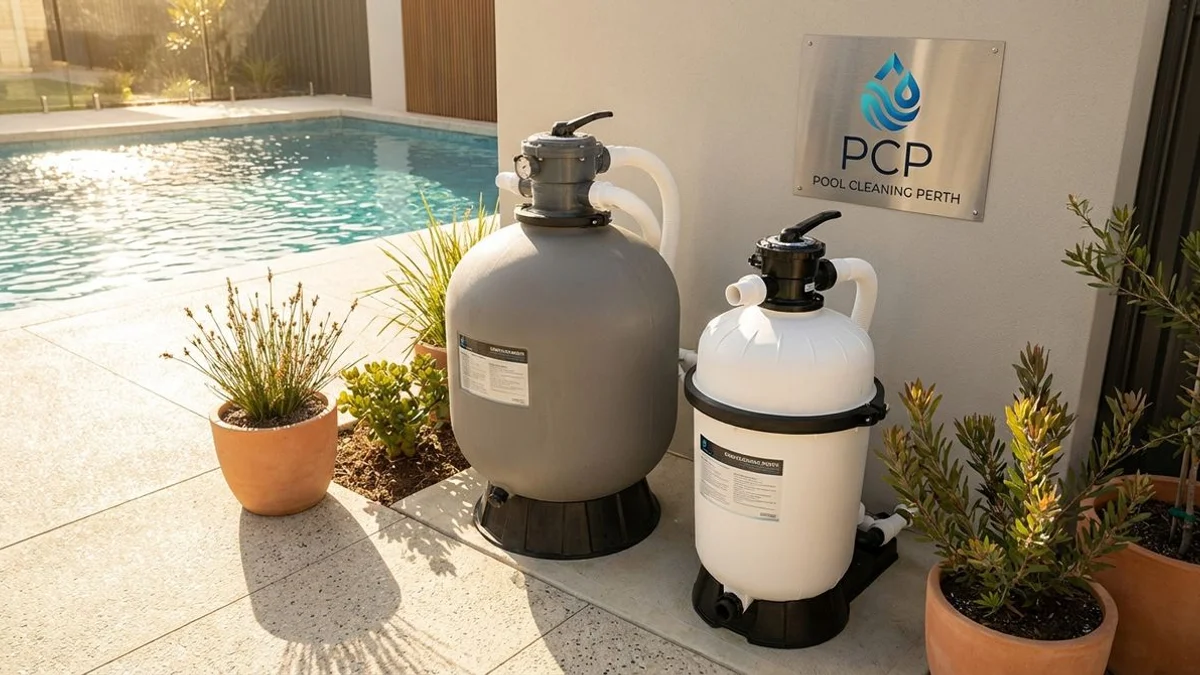
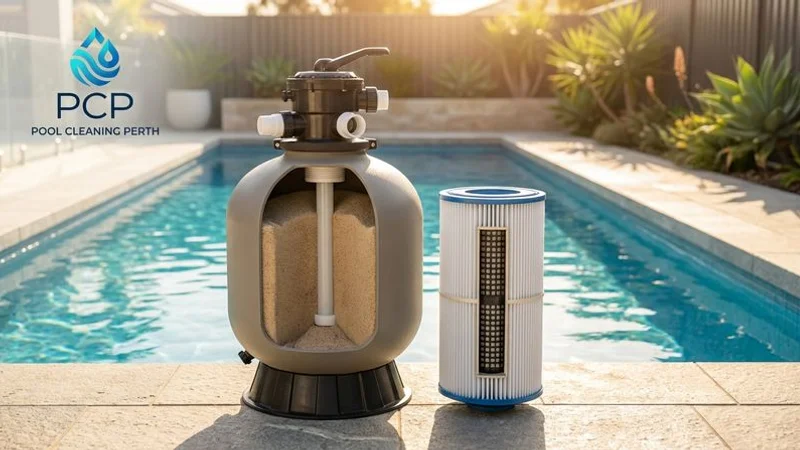
A sand filter is a large cylindrical tank filled with specially graded silica sand. Pool water is pumped into the top of the tank and flows down through the sand bed, which traps particles as small as 20 to 40 microns. Clean water exits through a collection system at the bottom and returns to the pool.
When the sand becomes clogged with trapped debris, you perform a backwash: reversing the water flow through the sand to flush out the accumulated dirt and send it to waste. This takes about 3 to 5 minutes and uses 200 to 400 litres of water.
How Cartridge Filters Work
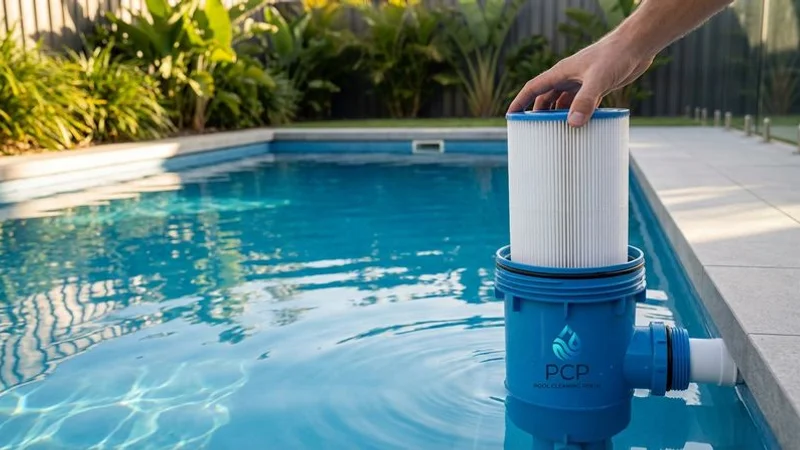
A cartridge filter uses a pleated polyester fabric element housed inside a tank. Water flows through the pleated material, which traps particles as small as 10 to 15 microns, providing finer filtration than sand. When the cartridge becomes clogged, you remove it from the tank and hose it off with a garden hose.
Head-to-Head Comparison
| Factor | Sand Filter | Cartridge Filter |
|---|---|---|
| Filtration fineness | 20-40 microns | 10-15 microns |
| Water clarity | Good | Excellent |
| Maintenance | Backwash every 2-4 weeks | Remove and hose every 2-4 weeks |
| Water waste | 200-400L per backwash | None (minimal during cleaning) |
| Lifespan | 7-10 years (sand media) | 1-2 years (cartridge element) |
| Purchase cost | $500-$1,200 | $400-$1,000 |
| Ongoing costs | Sand change every 5-7 years ($250-$450) | Cartridge replacement every 1-2 years ($100-$300) |
| Physical effort | Easy (turn a valve) | Moderate (remove, hose, reinstall) |
| Space required | Larger footprint | Smaller footprint |
| Best for | Larger pools, high debris areas | Smaller pools, water-conscious owners |
Advantages of Sand Filters
Low Maintenance Effort
Backwashing a sand filter takes 3 to 5 minutes and involves turning a multiport valve. You do not need to remove anything from the tank or handle the filter media. For pool owners who want minimal physical involvement in filter maintenance, sand filters are the easier option.
Long Media Life
Pool filter sand lasts 5 to 7 years before it needs replacing. Some pool owners using glass media (a premium alternative to sand) get 10 or more years between changes. This means your ongoing maintenance costs are relatively low and infrequent.
Handles Heavy Debris Loads
Sand filters handle large volumes of debris well, making them a strong choice for pools in leafy Perth suburbs like Mount Claremont, Dalkeith, and Nedlands. When the filter clogs, you simply backwash and continue. A cartridge filter in the same conditions would need much more frequent cleaning.
Durability
The sand filter tank itself is extremely durable. With proper maintenance, the tank and multiport valve can last 15 to 20 years or more. The only regular replacement item is the sand media.
Advantages of Cartridge Filters
Superior Water Clarity
Cartridge filters provide finer filtration (10 to 15 microns versus 20 to 40 microns for sand), resulting in noticeably clearer water. If water clarity is your top priority, cartridge filters deliver better results.
No Water Waste
In Perth, where water is a valuable resource and water restrictions are a regular consideration, cartridge filters have a significant advantage. They do not require backwashing, which means no water is sent to waste during the cleaning process. Over a year, a sand filter can waste 5,000 to 10,000 litres of water through regular backwashing.
Lower Energy Use
Cartridge filters operate at lower pressure than sand filters, which means your pump does not need to work as hard to push water through the filter. This can translate to modest energy savings over the life of the filter, particularly if you have a variable speed pump that adjusts to the resistance.
Compact Size
Cartridge filter tanks are smaller than sand filter tanks, making them a better choice for properties with limited equipment space. This is relevant in newer Perth developments where equipment areas are often compact.
Disadvantages of Each Type
Sand Filter Drawbacks
- Water waste from backwashing: Regular backwashing sends chemically treated water to waste
- Coarser filtration: Cannot match cartridge filters for water clarity without additional treatment (clarifier or flocculant)
- Channelling risk: Over time, sand can develop channels that allow water to pass through without proper filtration. This is invisible from outside the tank and requires opening the tank to inspect
- Larger footprint: Takes up more space in the equipment area
Cartridge Filter Drawbacks
- More hands-on maintenance: Removing, hosing, and reinstalling the cartridge every few weeks is more effort than turning a valve
- Shorter element life: Cartridge elements need replacing every 1 to 2 years, which is an ongoing cost
- Struggles with heavy debris: In high-debris conditions, cartridge filters clog quickly and may need cleaning weekly or even more frequently
- Deep cleaning required: Occasional soaking in filter cleaning solution (every 3 to 6 months) is needed to remove oils and organic buildup that hosing alone cannot remove
Which Filter Is Best for Perth Conditions?
The right choice depends on your specific situation:
Choose a Sand Filter If:
- Your pool is surrounded by trees and receives heavy debris (common in established Perth suburbs)
- You have a larger pool (60,000 litres or more)
- You prefer low-effort maintenance
- You are not concerned about water waste from backwashing
- You have adequate space for the larger tank
Choose a Cartridge Filter If:
- Water conservation is important to you
- Your pool has minimal debris exposure (newer estates, minimal vegetation)
- You want the clearest possible water
- Your pool is smaller (under 50,000 litres)
- You have limited equipment space
- You do not mind the physical task of removing and cleaning the cartridge
The Glass Media Alternative
Some Perth pool owners choose a sand filter but replace the sand with recycled glass media. Glass media provides finer filtration (around 15 microns) than standard sand while retaining the convenience of backwash cleaning. Glass media also lasts longer than sand (up to 10 years or more) and uses less water during backwashing. It costs more initially but offers a compelling middle ground between sand and cartridge filtration.
Making the Switch
If you currently have one filter type and are considering switching to the other, keep in mind that the plumbing connections differ. Switching from sand to cartridge (or vice versa) typically requires some plumbing modifications and may need professional installation.
Professional Advice for Your Pool
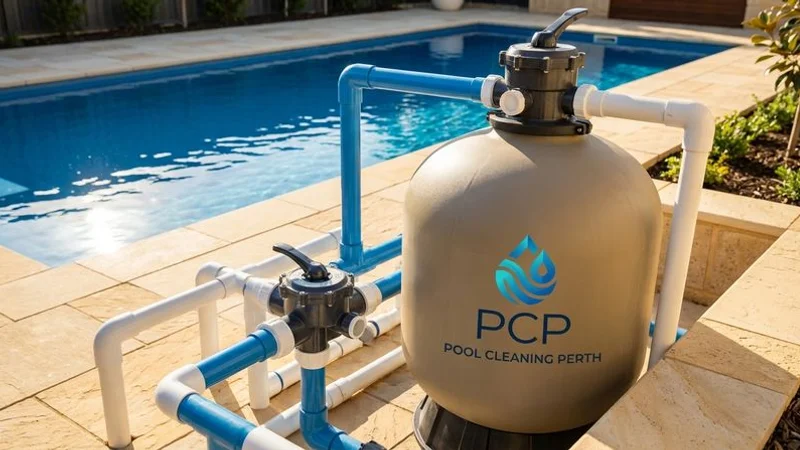
The best filter for your pool depends on factors specific to your property, including pool volume, pump capacity, debris load, and your maintenance preferences. Getting professional advice ensures you choose a filter that is properly sized and matched to your system.
Pool Cleaning Perth can assess your current filtration setup and recommend the best pool equipment solution for your needs. Whether you need a filter service, media change, cartridge replacement, or a complete filter upgrade, we are here to help. Call us on 08 7943 6637 for expert filter advice and service across the Perth metropolitan area.
Need Professional Pool Help?
Our team of experienced technicians is ready to help with all your pool needs across Perth.
Get a Free Quote