A green pool is not inevitable. While Perth’s warm climate and intense sunshine make our pools more susceptible to algae than pools in cooler parts of Australia, the reality is that a green pool is almost always preventable with the right habits and a bit of consistency.
Here are seven practical, proven tips that will keep your pool clear and algae-free throughout the year.
1. Maintain Consistent Chlorine Levels
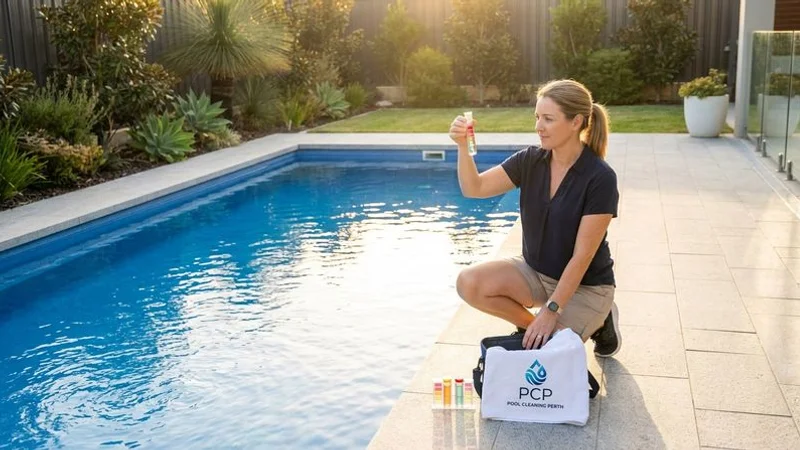
Chlorine is your pool’s primary defence against algae, and consistency is what matters most. A pool that maintains 2 to 3 ppm of free chlorine at all times rarely develops algae problems. The issues start when chlorine drops below 1 ppm, which can happen surprisingly quickly in Perth conditions.
Why Chlorine Drops
- UV radiation breaks down chlorine. Perth averages over 8 hours of sunshine per day in summer, and UV is the number one chlorine killer.
- High water temperatures accelerate chemical reactions, consuming chlorine faster.
- Organic matter like leaves, insects, sunscreen, and body oils all consume chlorine.
- Inadequate stabiliser leaves chlorine unprotected against UV.
What to Do
Test your chlorine at least twice per week during summer and once per week during winter. If you have a salt chlorinator, check that it is producing adequately and increase the output during warmer months. Keep a supply of liquid chlorine on hand for top-ups between chlorinator cycles.
2. Keep Your Stabiliser in the Right Range
Cyanuric acid (stabiliser) is essential for protecting chlorine from UV degradation, but it is a double-edged sword. Too little stabiliser and your chlorine burns off in hours. Too much and your chlorine becomes locked up and ineffective against algae.
Ideal Range
The ideal stabiliser range for Perth pools is 30 to 50 ppm. Below 30 ppm, chlorine is unprotected. Above 80 ppm, chlorine effectiveness drops significantly. Above 100 ppm, even heavily chlorinated water may grow algae.
The Over-Stabilisation Trap
Stabiliser does not evaporate, does not break down, and is not removed by filtration. The only way to reduce stabiliser is to drain water and replace it with fresh water. Over-stabilisation builds up slowly over years when stabilised chlorine products (granular chlorine, chlorine tablets) are used regularly.
If your stabiliser is creeping above 60 ppm, switch to unstabilised liquid chlorine (sodium hypochlorite) and let your salt chlorinator handle day-to-day chlorination. Test stabiliser quarterly and address high levels promptly.
3. Run Your Pump Long Enough
Circulation is essential for even chemical distribution and effective filtration. When water sits still, chlorine concentration becomes uneven, debris settles, and stagnant zones become breeding grounds for algae.
Recommended Run Times for Perth
| Season | Daily Pump Run Time |
|---|---|
| Summer (Dec-Feb) | 8-10 hours |
| Autumn (Mar-May) | 6-8 hours |
| Winter (Jun-Aug) | 4-6 hours |
| Spring (Sep-Nov) | 6-8 hours |
Use a timer to automate your pump schedule and run it during off-peak electricity hours where possible. The important thing is that the pump runs consistently every single day, all year round. Even in winter, completely shutting off the pump is a recipe for algae.
4. Clean Your Filter Regularly
Your filter removes microscopic particles, dead algae spores, and organic matter from the water. A clogged filter cannot do its job, and reduced filtration efficiency is one of the most common contributors to green pools.
Sand Filters
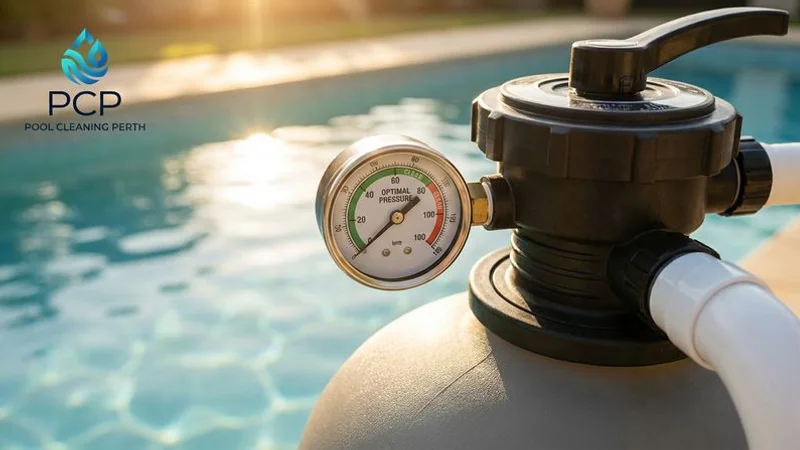
Backwash when the pressure gauge reads 8 to 10 psi above the clean starting pressure. This is typically every 2 to 4 weeks depending on pool use and debris load. Have the sand inspected annually and replaced every 5 to 7 years. Channelling in old sand reduces filtration dramatically.
Cartridge Filters
Remove and hose off cartridge elements every 2 to 4 weeks. Deep soak in filter cleaner every 3 to 6 months. Replace cartridges every 1 to 2 years depending on condition.
5. Remove Debris Before It Decomposes
Leaves, insects, pollen, and other organic matter do more than make your pool look untidy. As they decompose, they consume chlorine, lower pH, and provide nutrients that feed algae growth.
Perth-Specific Debris Issues
Perth’s native vegetation is beautiful but creates specific challenges for pool owners:
- Eucalyptus leaves release tannins that stain surfaces and consume chlorine
- Paperbark sheddings clog skimmers and break into fine particles that pass through filters
- Jacaranda flowers (common in suburbs like Subiaco and Claremont) create a thick mat on the surface during flowering season
- Pine needles from Norfolk Island pines sink to the bottom and are difficult to remove
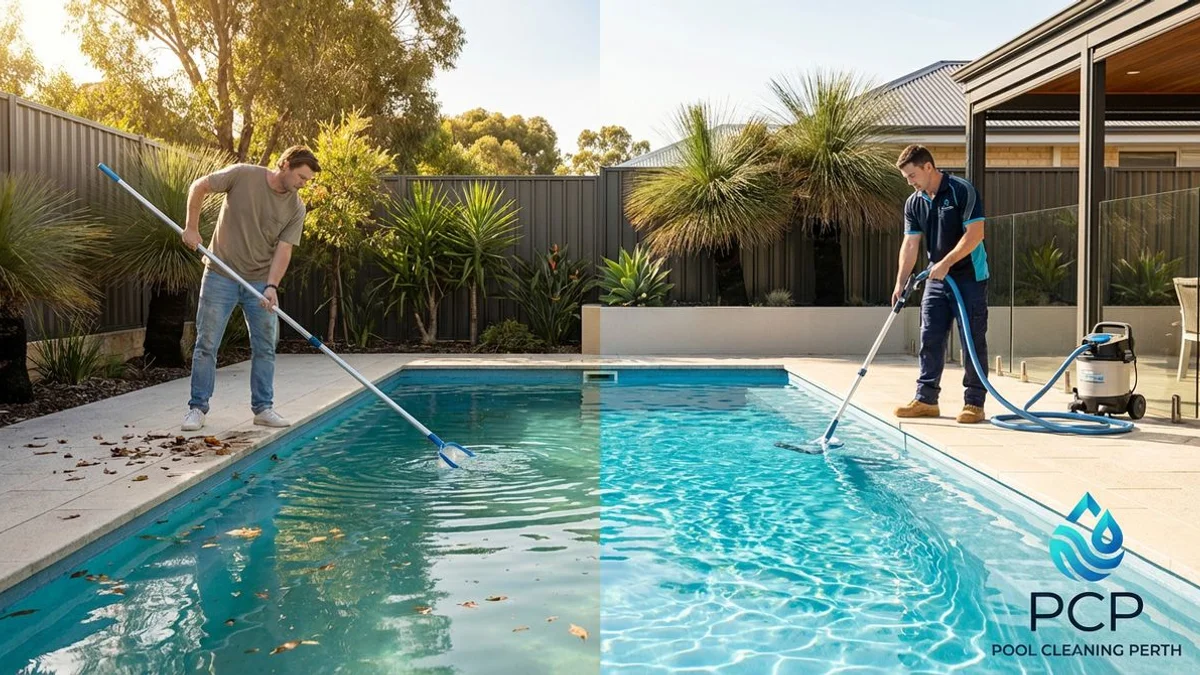
Empty your skimmer basket at least twice per week. Skim the surface daily during heavy leaf fall. Vacuum the pool floor weekly or invest in an automatic pool cleaner that runs while the pump is operating.
Consider trimming overhanging branches or installing a leaf net during autumn and winter to reduce the volume of debris reaching your pool.
6. Maintain Your Salt Chlorinator
Most residential pools in Perth use salt chlorination systems, and a failing chlorinator is one of the top causes of green pools. The problem is that chlorinators often fail gradually, producing less and less chlorine over time until algae gets the upper hand.
Monthly Checks
- Verify the chlorinator is producing by testing free chlorine levels before and after a running cycle
- Check the cell for visible scale buildup (white deposits on the electrodes)
- Ensure the salt level is within the manufacturer’s recommended range (typically 4,000 to 6,000 ppm)
- Listen for error codes or warning indicators on the control unit
Annual Service
Have your chlorinator cell professionally inspected and cleaned at least once per year. A technician can measure actual chlorine output and compare it to the unit’s capacity. Cells typically last 3 to 7 years depending on water balance and usage.
If your chlorinator is approaching the end of its cell life, plan for replacement rather than waiting for it to fail completely.
7. Use Algaecide as a Preventative
While chlorine should be your primary defence against algae, a monthly dose of preventative algaecide provides a valuable safety net. Algaecides work differently from chlorine and can suppress algae growth even during brief periods when chlorine dips.
Choosing an Algaecide
- Quaternary ammonium (Quat) algaecides are affordable and effective for prevention. Use monthly at the maintenance dose.
- Polyquat algaecides are non-foaming and do not affect water chemistry. They are more expensive but gentler on pool surfaces.
- Copper-based algaecides are very effective but must be used carefully. Copper can stain surfaces and turn hair green if levels get too high. We generally do not recommend copper-based algaecides for routine prevention.
Add algaecide after your regular chemical treatment, when chlorine levels are in the normal range (not during a shock treatment, as high chlorine deactivates most algaecides).
Bonus: Plan for Absences
If you are going on holiday, arrange pool care before you leave. Even two weeks without maintenance during a Perth summer can result in a green pool. Options include asking a neighbour to check chemical levels and run the skimmer, or booking a professional to visit while you are away.
Many of our clients who travel regularly keep their pool on a weekly or fortnightly service plan that continues regardless of whether they are home. This ensures the pool is always ready to swim when they return.
Prevention Is Always Cheaper Than Cure
A green pool recovery in Perth typically costs $300 to $1,000 or more. In contrast, the preventative measures outlined above cost a fraction of that and keep your pool swim-ready all year round.
Pool Cleaning Perth offers tailored maintenance plans that include all of these preventative measures. If you want the peace of mind that comes with knowing your pool is properly maintained by professionals who understand Perth conditions, call us on 08 7943 6637 or request a quote online today.
Need Professional Pool Help?
Our team of experienced technicians is ready to help with all your pool needs across Perth.
Get a Free Quote